Recommended Reading

Image: Shutterstock
Find or Share a Book
Search inSpirit, UUA’s bookstore. Find an independently owned audio bookstore.
Find an independently owned bookstore in Kitsap County.
Find a black or indigenous owned bookstore. Find a woman owned bookstore in Washington state.
Find a LGBTQIA+ owned and queer friendly bookstore in Washington state.
Search the Kitsap Regional Library Recommend a book to the Kitsap Regional Library.
Recommend a book for inclusion on this page or submit an original book review.
DONATE A BOOK TO KUUF LIBRARY!
Books by Marshall B. Rosenberg
Recommended by Marcia Christen
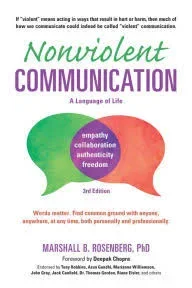
Marshall Rosenberg dedicated his life to teaching compassionate communication and mediating conflicts. Here is a look at his legacy and what happened to his work:
Growing up in Detroit, he experienced and witnessed violence, which motivated him to find peaceful alternatives to conflict. He developed NVC in the 1960s, a framework focused on empathy, deep listening, and expressing needs without blame.
He founded the Center for Nonviolent Communication in 1984. Through it, he traveled to over 60 countries, meiatisputes in war-torn regions, prisons, and schools.
His bestselling book, Nonviolent Communication: A Language of Life, has sold millions of copies worldwide. His work remains highly active through the global Center for Nonviolent Communication and various independent trainers who continue to share his methods.
In her sermon at KUUF, Rev. Nancy Reid-McKee spoke of this book, "Hope in the Dark” by Rebecca Solnit.
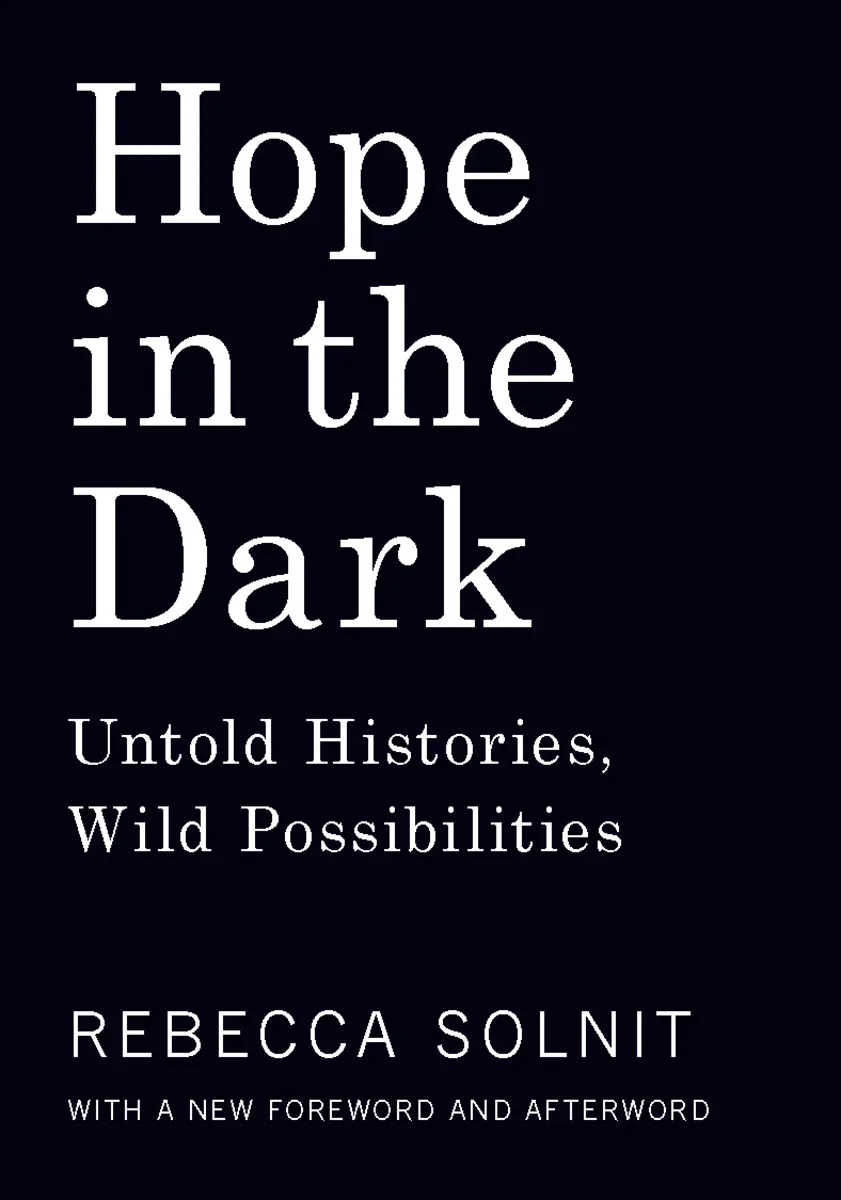
“A book as powerful and influential as Rebecca Solnit's Men Explain Things to Me, her Hope in the Dark was written to counter the despair of radicals at a moment when they were focused on their losses and had turned their back to the victories behind them and the unimaginable changes soon to come. In it, she makes a radical case for hope as a commitment to act in a world whose future remains uncertain and unknowable. Drawing on her decades of activism and a wide reading of environmental, cultural, and political history, Solnit argued that radicals have a long, neglected history of transformative victories, that the positive consequences of our acts are not always immediately seen, directly knowable, or even measurable, and that pessimism and despair rest on an unwarranted confidence about what is going to happen next. Now, with a moving new introduction explaining how the book came about and a new afterword that helps teach us how to hope and act in our unnerving world, she brings a new illumination to the darkness of 2016 in an unforgettable new edition of this classic book.”
Frances Ellen Watkins Harper
Her Wikipedia Biography and Her Compete Writings
Frances Ellen Watkins Harper’s life (1825 - 1911) was featured in a “Time for Ages” segment during a KUUF worship service. Renewed interest her writing resulted in the publication of her writings in 2021 over a hundred years after her death. She was a prominent 19th-century abolitionist and author who maintained a unique, dual religious affiliation, bridging both Unitarian and African Methodist Episcopal (AME) churches. She became a member of the First Unitarian Church in Philadelphia in 1870 while simultaneously teaching Sunday school at an AME church. Here is her biography on Wikipedia. Below is information on her writings.
The Bookseller’s Description
The Complete Frances Harper (2021) is a collection of writing by Frances Ellen Watkins Harper. Harper, the first African American woman to publish a novel, gained a reputation as a popular poet and impassioned abolitionist in the decades leading up to the American Civil War. Much of her work was rediscovered in the twentieth century and preserved for its significance to some of the leading social movements of the nineteenth century, including temperance, abolition, and women's suffrage. As an artist for whom the personal was always political, Frances Harper served in a leadership role at the Women's Christian Temperance Union and worked to establish the National Association of Colored Women, serving for a time as vice president of the organization.
Included in this volume are her early poetry volumes, such as Forest Leaves (1845) and Poems on Miscellaneous Subjects (1854). In "Bury Me in Free Land," an influential poem published in an 1858 edition of abolitionist newspaper The Anti-Slavery Bugle, Harper expresses her commitment to the cause of freedom in life or death terms: "I ask no monument, proud and high, / To arrest the gaze of the passers-by; / All that my yearning spirit craves, / Is bury me not in a land of slaves." She reflects on the theme of freedom throughout her body of work, often examining her own identity or experiences as a free Black woman alongside the lives of her enslaved countrymen.

The Complete Frances Harper also includes her four groundbreaking novels. Minnie's Sacrifice (1869), originally serialized in the Christian Recorder, addresses such themes as miscegenation, passing, and the institutionalized rape of enslaved women using the story of Moses as inspiration. Sowing and Reaping (1876) is a novel concerned with the cause of temperance in a time when Black families were frequently torn apart by alcoholism. Trial and Triumph (1888-1889) is a politically conscious novel concerned with an African American community doing its best to overcome hardship with love and solidarity. Iola Leroy, or Shadows Uplifted (1892) is a story of liberation set during the American Civil War that deals with such themes as abolition, miscegenation, and passing. In these novels, poems, speeches from across her lengthy career as an artist and activist, Harper not only dedicates herself to her suffering people, but imagines a time "When men of diverse sects and creeds / Are clasping hand in hand." This edition of The Complete Frances Harper is a classic of African American literature reimagined for modern readers.

Image: Shutterstock
Mack’s List
TITLE
AUTHOR
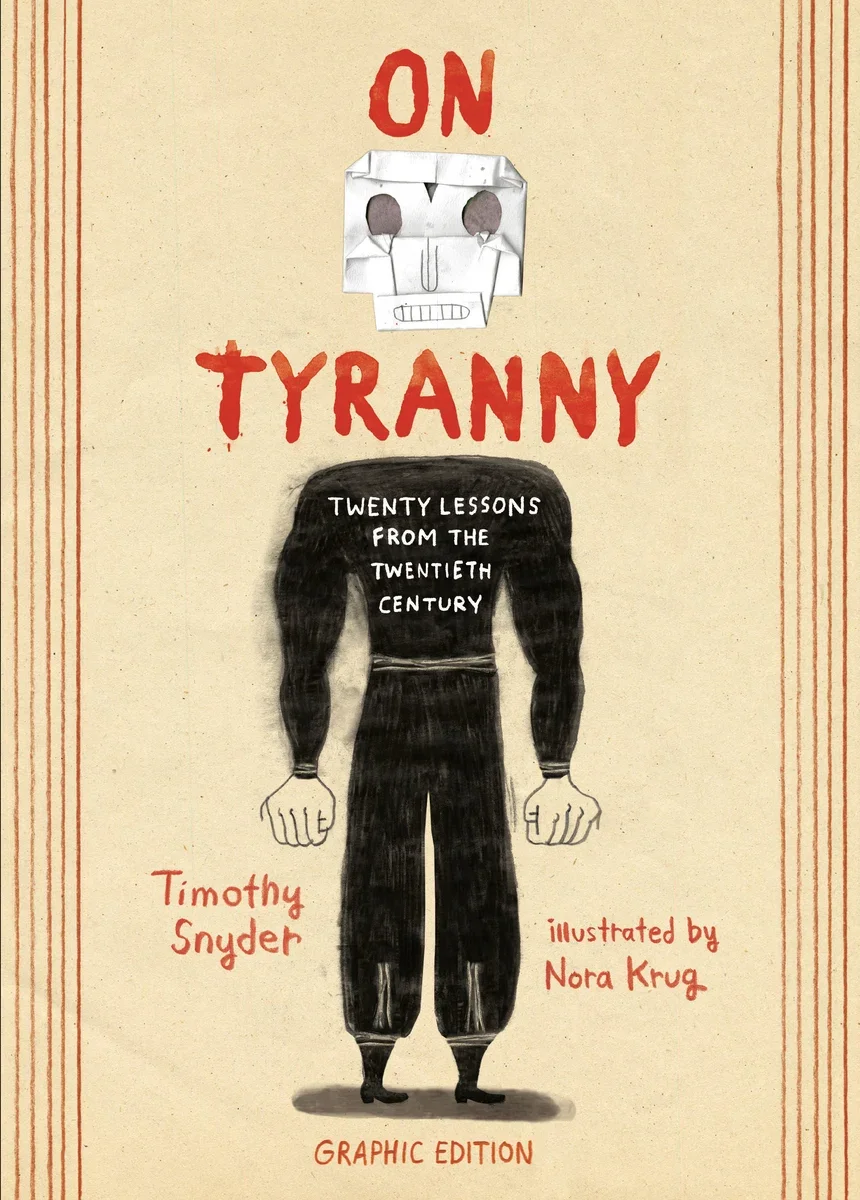
“On Tyranny” by Timothy Snyder
Historian Timothy Snyder, now at the University of Toronto, emphasizes that resistance is crucial for democracy, advocating for active, conscious choices against tyranny, starting with "do not obey in advance," defending institutions, and engaging in "corporeal politics" ( getting outside, making eye contact, joining groups) to build collective power and break the spell of authoritarianism, as detailed in his book On Tyranny. He stresses that freedom requires struggle, self-knowledge, and active participation, not just passive acceptance.
Key aspects of his message on resistance:
• Don't Obey in Advance: The most important lesson is to resist anticipatory obedience, where citizens offer submission before being asked, which empowers would-be tyrants.
• Defend Institutions: Protect democratic structures, professional ethics, and the rule of law, as they are essential for a functioning society.
• Practice "Corporeal Politics": Get your body out of your chair and into the world by making eye contact, joining local groups, and engaging with unfamiliar people to build social bonds and resist digital isolation.
• Stand Out & Be Brave: It feels strange, but someone must break the status quo; setting an example, like Rosa Parks, creates space for others to follow and fosters freedom.
• Believe in Truth & Be Critical: Investigate, be wary of language manipulation, and seek truth, as lies are used to control people and stop progress.
• Build Community & Private Life: Foster personal connections, maintain friendships abroad, and establish a private life to avoid giving rulers leverage, according to Carnegie Corporation of New York's website.
In essence, Snyder argues that democracy isn't automatic; it requires constant, courageous, and creative effort from individuals to build the societal structures and personal habits that sustain freedom.
The graphic edition of Timothy Snyder's On Tyranny was illustrated and designed by Nora Krug, a German-American author and illustrator.
“Inconspicuous Consumption: The Environmental Impact
You Don’t Know You Have “
by Tatiana Schlossberg
First Place Winner of the Society of Environmental Journalists' Rachel Carson Environment Book Award
"If you're looking for something to cling to in what often feels like a hopeless conversation, Schlossberg's darkly humorous, knowledge-is-power, eyes-wide-open approach may be just the thing."--Vogue
"A compelling-and illuminating-look at how our daily habits impact the environment."--Vanity Fair
"Shows how even the smallest decisions can have profound environmental consequences."--The New York Times
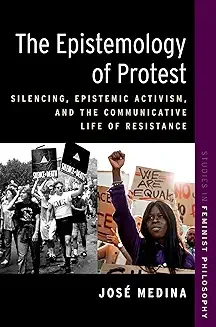
The Epistemology of Protest -
Silencing, Epistemic Activism, and Communicative Life of Resistance
By Jose Medina
An Excerpt
“Even when an act of protest is performed by a single individual, it is open to others joining in; or at the very least it is open to being continued or repeated or echoed by others. One can stand in protest, as the man who stood in front of a line of tanks in Tiananmen Square, Beijing, did in1989. One can sit down in protest, as Rosa Parks did in the Montgomery Bus Boycott did in 1955. One can kneel down in protest as Colin Kaepernick did in 2016. Individuals can do this by themselves, but an act of protest is never individualistic in a strong sense; it is an act of political communication performed by individuals, but one that always exceeds the particular individuals who perform it and their communicative intentions. I am interested in collective protests broadly conceived, that is, protests that involve collective actions, the expression of a collective voice, and very often also the assembly or gathering of people in public spaces or platforms, (including digital platforms, especially in these days of online activism). Protests of this sort rely on the freedom of assembly, of expression, and of speech guaranteed in democratic societies. At the same time, democratic societies rely on protests for maintaining and renewing the democratic commitment to freedom, equality and justice. Public dissent through protest is one of the key mechanisms through which members of democratic societies can denounces injustices and call for the deepening of democratic values: more freedom, more equality, more justice.”
A copy has been donated to the KUUF.
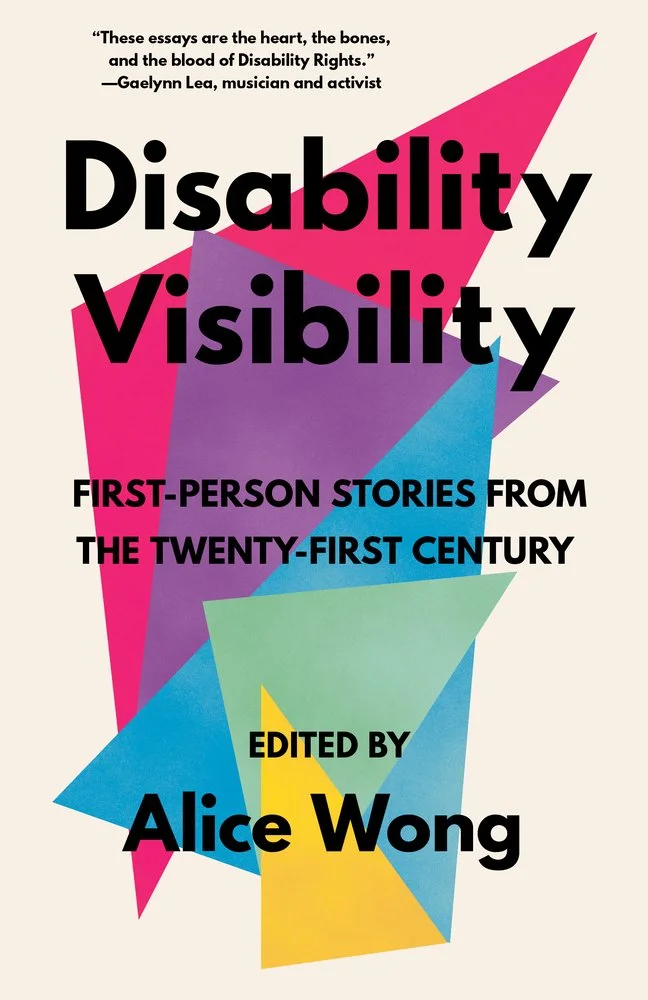
Excerpt from Harriett McBryde Johnson’s first person story
in “Disability Visibility” edited by Alice Wong.
(Related Cause: Disability Justice & Rights)
”It is a chilly Monday in late March, just less than a year ago. I am at Princeton University. My host is Professor Peter Singer, often called – and not just by his book publicist – the most influential philosopher of our time. He is the man who wants me dead. No, that is not at all fair. He wants to legalize the killing of certain babies who might come to be like me if allowed to live. He also says that is should be lawful under some circumstances to kill, at any age, individuals with cognitive “person”. What does it take to be a person? Awareness of your own existence in time. The capacity to harbor preferences as to the future, including the preference for continuing to live.
At this stage of my life, he says, I am a person. However, as an infant, I wasn’t. I like all humans, was born without self-awareness. And eventually, assuming my brain finally gets so fried that I fall into that wonderland where self and other and present and past and future blurs into one boundless, formless all or nothing, then I’ll lose my personhood and therefore my right to life. Then he says, my family and doctors might put me out of my misery, or out of my bliss or oblivion, and no one count it murder.”
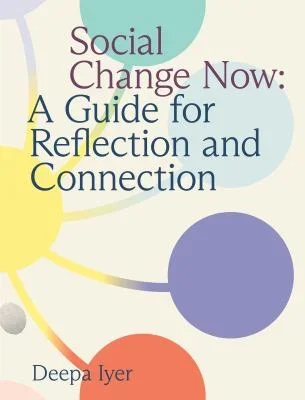
Social Change Now: A Guide for Reflection and Connection
By Deepa Iyer
Excerpt
“This book provides a roadmap for people and organizations in various stages of engagement with social change efforts… Being part of social change efforts is one of the most important ways we can connect with each other at a time when society insists upon compartmentalizing into silos of identity, thought, political alignment, and geography. When we engage in social change, we resist these silos and choose connection and solidarity. We recognize that we can no longer deny, dismiss, or delegate systemic injustice to others to fix; these issues are our business and everyone’s responsibility. Together, we can change unfair and unjust policies, increase access and opportunity, celebrate and express our joy, and create paths to sharing power.”
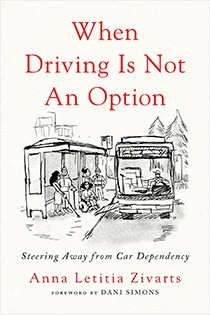
When Driving Is Not An Option by Anna Zivarts
Driving Is Not an Option: Steering Away from Car Dependency by Anna Letitia Zivarts (published May 2024 by Island Press) explores the experiences of the one-third of Americans who do not drive, advocating for more accessible transportation infrastructure. The book highlights the need for better transit, sidewalks, and mobility options for involuntary nondrivers.
Key Details About the Book:
• Author: Anna Letitia Zivarts, a low-vision advocate and founder of the Disability Mobility Initiative. When
• Focus: Shines a light on the, often dangerous, reality for people who cannot drive and the need for inclusive planning.
• Key Themes: Covers the #WeekWithoutDriving challenge, the burden of forced reliance on others for transport, and creating climate-friendly, accessible communities.
• Publisher: Island Press.