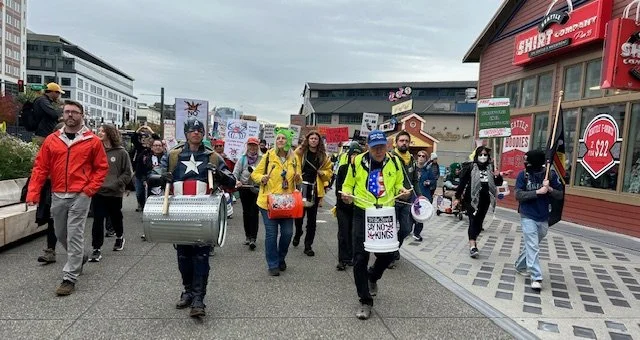
Image: Mark Stroh
The Role of Protest
From a social justice activist perspective, protest serves as a crucial tool to challenge injustice, raise awareness, and demand change by publicly expressing dissent, uniting communities, and putting pressure on those in power. It makes injustices visible and audible in the public sphere, empowering marginalized voices, holding institutions accountable, and influencing public opinion and policy.
Key Roles of Protest
Publicly express dissent and awareness
Protests are a way to publicly denounce injustice and make it visible and known to the broader public and media. This can involve marches, sit-ins, or other public demonstrations.
Create solidarity and community
Protests foster a sense of unity and solidarity among people who share a common cause, empowering them and building a stronger collective identity.
Pressure for policy and legal change
By demonstrating public will, protests can influence policy, legislation, and political action. Historical examples like the Civil Rights Movement show how protests have led to significant social and political reforms.
Challenge the status quo
Protests directly challenge existing power structures and systems, disrupting insensitivity and forcing conversations about issues that might otherwise be ignored.
Mobilize the public
Protests can inform and mobilize people who may have been previously disengaged. They can shift public opinion and even alter voting behaviors, creating a wider base of support for a cause.
Serve as a form of communication
Protests communicate moral judgments about injustices and can articulate new political visions. They are a powerful form of collective expression and a means of learning about and engaging with social issues.